Source Dual Gear Pump for Concrete Pump, Crane, and Excavator
Find 30 construction machinery dual gear pump options from verified Chinese suppliers. Compare specifications, certifications, and prices for hydraulic pumps used in concrete pumps, cranes, and excavators.
Key considerations
Products List




Comprehensive Sourcing Guide
Strategic Sourcing Guide for Construction Machinery Dual Gear Pumps
Understanding the Technical Architecture of Dual Gear Pumps
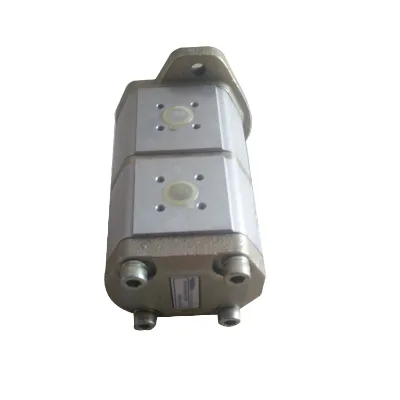
The core keyword "construction machinery dual gear pump" refers to a specific class of hydraulic components designed to deliver fluid power in heavy-duty environments. Based on observed product attributes, these units are fundamentally constructed from high-grade materials, with steel and carbon steel being the primary choices for durability and resistance to high-pressure conditions. The internal architecture often features a cycloid tooth curve with straight tooth flanks, engaging in an internal mesh form. This specific geometric configuration is critical for maintaining consistent flow rates and minimizing pressure pulsation, which is essential for the stability of construction equipment.
The operational profile of these pumps is typically hydraulic, driven by the engine or motor of the host machinery. They are frequently categorized under specific model numbers such as GP40/SP20 or Rexroth Double Gear Pump, indicating their capacity and design lineage. The working life of these components is generally observed to be around one year under standard operating conditions, though this can vary based on maintenance schedules and load intensity. The connection mode is predominantly flange-based, ensuring a secure and leak-proof interface with the hydraulic system of the host vehicle. When evaluating the physical specifications, buyers should note that dimensions can vary, with some units adhering to specific standard sizes like 620500520, while others may require specific re-estimation based on the application.
Compliance and Certification Verification Protocols
In the global construction machinery supply chain, verifying compliance is not merely a formality but a critical risk mitigation strategy. The supplied data indicates that a significant portion of available dual gear pumps carry CE certification, which is a mandatory requirement for products entering the European market. Furthermore, ISO9001 certification is frequently observed, suggesting that the manufacturing processes of these suppliers adhere to international quality management standards. Some listings also reference RoHS compliance, indicating adherence to restrictions on hazardous substances, which is increasingly important for environmental regulations in various jurisdictions.
Buyers must treat these certifications as observations of specific listings rather than universal guarantees for all products in the category. The presence of "CE, ISO9001" or "CE, ISO, RoHS" in a product description signals that the specific item has undergone the necessary assessment processes. However, the absence of these tags in a listing does not automatically disqualify a product, but it necessitates a deeper inquiry into the supplier's quality assurance documentation. It is vital to verify that the certification documents provided are current and issued by recognized bodies. The "Single/Double" standard mentioned in product attributes likely refers to the configuration of the pump (single or double gear sets), but buyers should confirm if this aligns with specific industry standards required for their region or project.
Cost Drivers and Pricing Structure Analysis
The pricing landscape for construction machinery dual gear pumps is characterized by a wide range, with observed listed prices spanning from 23 to 2000 USD. This significant variance is driven by several factors, including the complexity of the gear design, the quality of the raw materials (steel vs. carbon steel), and the specific application requirements. Some products are listed with prices "According to Production Ability," indicating a negotiation-based model where the final cost depends on order volume and manufacturing capacity.
The Minimum Order Quantity (MOQ) is another critical cost driver, with observed ranges between 1 and 10 units. This flexibility allows buyers to procure single items for replacement or small batches for pilot projects, though larger orders may yield better unit economics. The selling unit is typically a single item, but packaging options like "Wooden Box," "Box or Carton Package," or "Standard Export Packing" can influence the total landed cost due to variations in shipping weight and volume. Buyers should also consider that "High Quality" and "Good Stability" are listed as merits, which often correlate with a higher price point but offer better long-term value through reduced downtime.
Typical Applications and Compatibility Matrix
Dual gear pumps are versatile components integrated into a wide array of heavy machinery. The supplied data highlights their application in machinery manufacturing, specifically for truck cranes, excavators, concrete pumps, crawler cranes, and drilling rigs. The "Apply for" and "Apply to" attributes clearly delineate these use cases, showing that the same pump model might serve multiple machine types depending on the hydraulic circuit requirements. For instance, a pump compatible with Wirtgen machinery might also be suitable for other brands if the hydraulic specifications align.
The following table summarizes the observed compatibility and application scenarios based on the provided product attributes:
| Application Sector | Specific Machinery Types | Key Compatibility Notes |
|---|---|---|
| Earthmoving | Excavators, Crawler Cranes | Requires high torque and stable flow; often uses Rexroth-style models. |
| Concrete Handling | Concrete Pumps | Critical for high-pressure fluid delivery; "Concrete Pump Spare Parts" is a common listing. |
| Lifting Operations | Truck Cranes | Demands good stability and precise control; often linked to hydraulic fitting standards. |
| Foundation Work | Drilling Rigs | High durability required; carbon steel construction is preferred for abrasion resistance. |
| General Manufacturing | Machinery Manufacturing | Broad application for various hydraulic systems. |
Buyers must verify the "Compatible Brand" listed in the product description against their specific equipment. While some pumps are generic, others are designed to fit specific OEM standards. The "Model Number" such as 9627941000 serves as a unique identifier that should be cross-referenced with the original equipment manufacturer's parts catalog to ensure mechanical fit and hydraulic performance.
Supplier Evaluation and Origin Verification
When sourcing from the global market, understanding the origin of the product is essential for logistics and quality assurance. The supplied data indicates that the majority of these products originate from China, with specific mentions of Hebei as a production hub. This regional concentration suggests a mature supply chain with established manufacturing capabilities for hydraulic components. However, the "Made in China" designation is a broad indicator; buyers should look for more specific details regarding the factory location and the supplier's track record in that region.
Supplier evaluation should extend beyond the product listing to include the verification of their production capacity. Attributes like "Customization: Available" suggest that suppliers are willing to adapt products to specific buyer needs, which is a positive indicator of flexibility. However, the "Working Life" of one year and "Warranty" periods of three months indicate that the baseline expectation is for standard industrial use. Buyers should inquire about the supplier's ability to provide extended warranties or support for critical applications. The "Advantage: High Quality" claim should be substantiated by the supplier's ability to provide test reports or references from previous clients in the construction sector.
Quality Control and Inspection Standards
Quality control for dual gear pumps involves rigorous inspection of both the material and the final assembly. The use of steel and carbon steel as primary materials is a baseline requirement, but the specific grade and heat treatment process are not detailed in the general listings. Buyers should verify the material certification to ensure the steel meets the required tensile strength and hardness for the intended application. The "Standard Export Packing" and "Wooden Box" options suggest that the packaging is designed to protect the component during transit, which is crucial for preventing damage to precision gear surfaces.
Inspection protocols should focus on the "Tooth Curve" and "Mesh Form" to ensure they match the specified cycloid and internal engagement. Any deviation in these geometric parameters can lead to premature wear or failure. The "Condition: New" attribute is standard, but buyers must ensure that the product has not been refurbished or remanufactured without disclosure. The "Warranty: 3 Months" provides a baseline for quality assurance, but for critical applications, buyers may negotiate longer warranty periods or require third-party inspection before shipment. The "Specific re-estimate" standard mentioned in some listings implies that dimensions or tolerances may need to be confirmed on a case-by-case basis, highlighting the need for detailed technical drawings in the procurement process.
Long-Term Procurement and Lifecycle Management
Sourcing dual gear pumps is not a one-time transaction but part of a long-term maintenance strategy. The "Working Life: 1 Year" observation suggests that these components are consumable items that will require replacement during the lifecycle of the construction machinery. Buyers should plan for inventory management to ensure that spare parts are available when needed, minimizing equipment downtime. The "Price: According to Production Ability" model indicates that supply chain stability is key; buyers should establish relationships with suppliers who can guarantee consistent production capacity to meet future demand.
The "Good Stability" and "High Quality" merits are indicators of reliability, but the actual performance in the field depends on the operating environment. Buyers should consider the total cost of ownership, which includes not just the purchase price but also installation costs, maintenance, and the cost of downtime. The "Flange" connection mode is a standard feature that simplifies replacement, but buyers should verify that the flange dimensions match their existing hydraulic lines. As the industry moves towards more efficient and durable machinery, the demand for high-performance dual gear pumps will likely increase. Buyers should stay informed about new standards and technological advancements in hydraulic systems to ensure their procurement strategy remains competitive and effective.
FAQs
What certifications are available for construction machinery dual gear pumps?
Available certifications include CE, ISO9001, and RoHS for specific listings. These indicate compliance with European safety and quality management standards, though not every product in the category carries all tags.
Which materials are used to manufacture these gear pumps?
Primary materials observed are steel and carbon steel. These materials are selected for their durability and resistance to high-pressure conditions in heavy-duty construction environments.
How long is the typical working life of a dual gear pump?
The observed working life is generally one year under standard operating conditions. This duration can vary based on maintenance schedules and the intensity of the load applied during operation.
Can buyers customize the specifications of these pumps?
Customization is available for many listed products. Buyers can request specific adaptations, but they must verify production capacity and lead times before finalizing orders.
What is the price range for construction machinery dual gear pumps?
Listed prices range from 23 to 2000 USD depending on the model and specifications. Some items are priced according to production ability, requiring negotiation based on order volume.
Which applications are these pumps designed for?
These pumps are used in concrete pumps, excavators, truck cranes, and drilling rigs. They are also suitable for general machinery manufacturing requiring hydraulic power.
What warranty periods are typically offered for these units?
A standard warranty of three months is observed for new units. Buyers should confirm if extended warranty options are available for critical applications.